
ALL TOOLS BLOG
The Real Cost of Skipping Eye Protection Onsite

Why “Near Enough” Isn’t Good Enough: The Real Cost of Skipping Eye Protection Onsite
Walk into any workshop, mine site, or residential build across Western Australia, and you’ll see the standard kit: steel caps, hi-vis, and a hard hat. But when it comes to safety glasses, things get sloppy. They get pushed up onto the forehead, left on the dash of the ute, or swapped out for cheap fashion sunglasses because it’s “just a quick cut.”
According to Safe Work Australia data, roughly 8% of all workplace injuries in Australia are eye injuries. That equates to around 50,000 eye injuries nationwide every single year.
The kicker? Up to 90% of these injuries are entirely preventable.
At Alltools WA, we supply gear to trade, industrial, mining, and gas sectors across the country. We see firsthand the consequences of using subpar equipment. If you’re relying on standard clear specs or a pair of cheap servo sunnies to protect your vision while grinding, drilling, or handling chemicals, you are rolling the dice on your eyesight.
The Hazards: It Only Takes a Millisecond
Most blokes think eye injuries only happen during massive structural failures or major accidents. In reality, the vast majority are caused by tiny, everyday particles.
Comcare data reveals that 59% of eye-related workers’ compensation claims are for a foreign body on the external eye.
| Hazard Type | Common Site Examples | Injury Risk |
| Mechanical Impact | Grinding metal, wood turning, masonry drilling, using explosive power tools | Flying wood chips, metal swarf, broken discs, or concrete fragments penetrating the eyeball. |
| Chemical Splash | Degreasing engines, battery maintenance, concrete mixing, handling solvents | Chemical burns, corneal ulceration, or permanent blindness from caustic liquids. |
| Optical Radiation | TIG/MIG welding, oxy-cutting, outdoor site work under the WA sun | “Arc eye” (radiation burns to the cornea), cataracts, and long-term UV damage. |
Decoding the Standard: AS/NZS 1337 Explained
You can buy a multi-pack of clear safety glasses online for next to nothing, but if they don’t carry the right certification stamp, they are useless under Australian WHS laws.
Industrial eye protection in Australia must comply with AS/NZS 1337.1 (for non-prescription) or AS/NZS 1337.6 (for prescription safety glasses).
The “Medium Impact” Test: To achieve a Medium Impact rating (marked with an “I” or “M” on the lens and frame), the eyewear must withstand a 6.35mm steel ball fired at 45 metres per second directly at the lens.
If your glasses aren’t certified, that flying fragment of a shattered cutting disc won’t just break the lens—it will drive the plastic shards straight into your eye.
Look for the Markings
Before you start a high-risk job, look at the inside arms or the corner of the lenses of your specs. You should see:
-
AS/NZS 1337.1 stamped on the frame.
-
An I or V mark, indicating medium impact resistance and UV protection.
-
Anti-fog (F) or scratch-resistant coatings if applicable.
Anti-Fog & Positive Seals: Solving the Real Reasons Guys Ditch Specs
When we ask tradies why they took their glasses off right before an accident, the answer is always the same: “They kept fogging up,” or “Dust kept getting behind the lens anyway.”
The industry has moved past the old, rigid plastic specs that dig into your ears and fog up the second you sweat. Modern site safety requires task-specific eyewear:
1. Anti-Fog Technology
In the heat of a WA summer or inside unventilated workshop bays, standard lenses fog up instantly due to humidity and sweat. Modern premium safety glasses utilize advanced hydrophilic coatings that bond to the lens, forcing moisture to spread evenly across the surface rather than forming performance-blocking mist.
2. Positive Seal Gaskets
If you are grinding metal, working in dusty ceiling spaces, or operating on a high-wind mine site, standard safety glasses leave a 5mm to 20mm gap around your cheeks and brows. Flying swarf and fine dust bounce off your face and land right behind the lens.
Positive seal safety glasses feature a detachable foam or rubber gasket that seals directly against your face, completely blocking airborne particles while maintaining airflow to prevent fogging.
Protect Your Real Estate
Your eyes are irreplaceable. A serious eye injury averages 1.5 to 7.4 weeks of lost working time, thousands of dollars in medical costs, and the permanent risk of vision loss.
Don’t treat eye protection as an afterthought or a box-ticking exercise for the safety rep. Invest in a pair of high-quality, certified AS/NZS 1337 specs that fit comfortably, don’t fog up, and actually keep the dust out.
Need to upgrade your crew’s safety gear or your current PPE setup?
Alltools WA
📍 204 Collier Road, Bayswater, WA 6053
📞 08 9272 7611
Drop into the store or get in touch with our procurement team to source certified eye protection built for heavy industrial use.
- Published in Tool Type
Winter is Coming: The Wet Weather Tool & Gear Checklist Every WA Tradie Needs
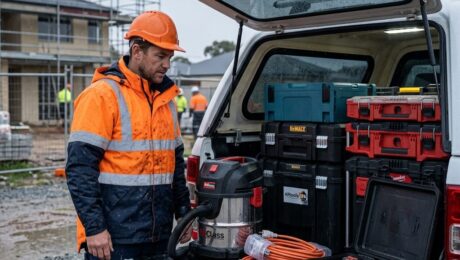
When the winter front rolls off the Indian Ocean and hits the Perth metro area or regional WA job sites, it doesn’t just bring a bit of drizzle—it brings driving rain, sudden downpours, and muddy chaos.
For a West Australian tradie, wet weather means more than just throwing on a hoodie. It means changing how you pack your ute, look after your gear, and run your site. Water and professional power tools don’t mix, and a waterlogged tool can stall a job faster than a missed delivery.
At Alltools WA, we’ve been supplying the local civil, mining, and residential trade sectors from our Bayswater showroom since 1992. We know what it takes to keep a site moving when the weather turns tracking sideways.
Here is your comprehensive, no-nonsense checklist of what you should be considering to protect your gear, your safety, and your livelihood this winter.
1. Up Your Ingress Protection (IP) Game
If you’re working outdoors or on unsealed residential frames, standard tools aren’t going to cut it in heavy winter rain. Pay attention to the IP (Ingress Protection) rating of your electronic gear, lasers, and cordless tools.
-
Look for IP56 or Higher: The first digit measures dust protection; the second measures water resistance. An IP56 rating means your tool can handle heavy splashing and high-pressure water jets from any direction.
-
The Right Tool for the Season: Major brands like Makita, DeWalt, and HiKOKI build specific lines with enhanced seals and internal rubber membranes to protect vulnerable electronic switches and battery terminals. If your current kit struggles in a light misty breeze, it’s time to upgrade before the real storms arrive.
2. Weatherproof Storage: Ditch the Canvas Bags
If you’re still keeping your premium cordless kits in soft canvas bags in the back of the ute, you’re asking for rust and fried circuit boards. Rain has a habit of finding its way under canopy seals and through tonneau covers.
-
Heavy-Duty Hard Cases: Swap canvas for modular, gasket-sealed hard cases like the Makita MAKTRAK or DeWalt TSTAK systems. These feature heavy-duty rubber seals that keep moisture entirely out, even if they catch the full brunt of a downpour while you’re unloading.
-
Moisture Control Packets: Pro-tip for WA winter: drop a few silica gel packs inside your hard cases. Even if the case is waterproof, locking a damp hand or tool inside can create a mini greenhouse effect overnight, leading to surface rust on your bits and blades.
3. Power Management & RCD Safety
Wet ground is highly conductive, making electrical safety your number one priority on a rainy site.
-
Inspect Cord Leads Daily: A tiny nick in an extension lead that goes unnoticed in dry November heat becomes an immediate shock hazard in winter puddles. Switch to high-visibility, heavy-duty leads designed for harsh environments.
-
Portable RCD Boxes: Never plug directly into a site box without an inline Residual Current Device (RCD). Ensure your RCD safety switches are housed in moisture-resistant, impact-resistant enclosures. If a breaker keeps tripping, don’t force it—water has already made its way in somewhere.
4. Site Clean-Up & Water Management
When water pools on-site, it doesn’t just create a slip hazard—it halts progress. Every tradie should have basic water management gear packed in the truck during June and July.
-
Wet/Dry Submersible Pumps: For sparkies, plumbers, and brickies dealing with flooded trenches or footings, a reliable puddle pump or submersible clear-water pump saves hours of manual bailing.
-
M-Class Industrial Vacuums: If you’re working indoor renos or fit-outs where rain has leaked through an unfinished roof, a robust wet/dry vacuum (like a Makita 30L M-Class) is essential to clear standing water before it damages timber framing or concrete slabs.
5. Maintenance: The “End of Shift” Routine
The easiest way to ruin high-end hand tools and power tools is to pack them away wet on Friday afternoon and leave them in the toolbox until Monday morning.
-
Dry and Displace: Keep a clean rag and a can of water-displacing lubricant (like WD-40 or Inox) handy. Wipe down your hand tools, spanners, and saw tables before they go into their boxes.
-
Battery Care: Never charge a battery that has wet terminals. Wipe them completely dry first. Cold weather can also sap battery efficiency, so avoid leaving your lithium-ion batteries overnight in an uninsulated metal toolbox or canopy where temperatures plummet.
Don’t Let the Winter Wet Stall Your Work
Being prepared for wet weather isn’t just about comfort—it’s about avoiding costly downtime, broken tools, and unsafe conditions.
If your winter kit is looking a bit worse for wear, or you need to upgrade to heavy-duty waterproof storage and weather-sealed tools, come chat with the team.
Drop into Alltools WA 204 Collier Road, Bayswater, or call us on (08) 9272 7611 to get the right trade gear, right when you need it.
- Published in Uncategorised
Power Tool Battery Care

Power Tool Battery Care: The Complete Australian Guide
Power tool battery care is the most overlooked factor in jobsite efficiency. Whether you are running Makita XGT, DeWalt XR, HiKOKI Multi-Volt, or industrial Metabo platforms, your batteries are the heartbeat of your business. As a nationwide supplier based in Western Australia, Alltools WA sees firsthand how the Australian climate, from the humid north to the frosty south, can destroy expensive gear if not managed correctly.
Why Power Tool Battery Care Matters in Australia
Australia’s diverse environment presents unique challenges for Lithium-Ion (Li-ion) chemistry. Proper power tool battery care isn’t just about making them last through the day; it’s about protecting a multi-thousand-dollar investment over several years.
1. Temperature Management and Battery Health
The internal chemistry of a battery is a delicate balance.
-
Heat Exposure: In Western Australia and the Northern Territory, ute temperatures can easily exceed 60°C. This cooks the internal cells, leading to permanent capacity loss. Always store your kit in a shaded, ventilated area.
-
Cold Climate Performance: For those in Tasmania or the Victorian Highlands, cold temperatures increase internal resistance. If your DeWalt or HiKOKI battery feels sluggish on a frost-covered site, bring it to room temperature before use.
-
The Cooling Phase: Never jump-start a hot battery on a fast charger. Give it 15 minutes to stabilize to prevent thermal stress.
2. Charging Strategies for Power Tool Battery Care
To maximize cycles, you need to understand how Li-ion behaves. Unlike old nickel-cadmium batteries, modern packs don’t need to be “cycled” to zero.
-
Avoid Deep Discharge: Stop using the tool as soon as you feel a power drop. Forcing a Makita or Metabo battery to work when it’s nearly empty can drop the voltage below the “recovery point,” making it unrecognizable to the charger.
-
The Storage Sweet Spot: If you are “parking” a tool for more than a month, store the battery at roughly 50% charge. Storing a battery at 100% in high heat is just as damaging as storing it at 0%.
3. Brand-Specific Innovation: Metabo, HiKOKI, and Others
While we carry all the major players, different brands offer unique tech for power tool battery care:
-
Metabo Ultra-M Technology: Metabo’s system is famous for its communication between the machine, battery, and charger. Their Air-Cooled charging technology ensures the pack stays at the optimum temperature while docked.
-
HiKOKI Multi-Volt: These batteries are engineered to handle high-demand 36V tasks with less heat buildup than traditional 18V systems.
-
The “Others” and Specialty Platforms: From specialized fabrication tools to standard kits, the same rules apply: keep the rails clean of metal shavings and dust to prevent parasitic draw.
4. Maintenance for Nationwide Longevity
Maintaining your gear is simple but essential.
-
Blow out the terminals: Use compressed air to clear the contact points.
-
Inspect the Casing: A cracked housing is a gateway for moisture and salt air, leading to internal PCB corrosion.
-
Secure your Load: Ensure batteries aren’t rattling loosely in the back of a van.
For more professional advice or to upgrade your current kit, browse our full range of batteries and chargers here.
- Published in Technology
Powered Saws: A Practical Guide for Industry, Trades and DIY
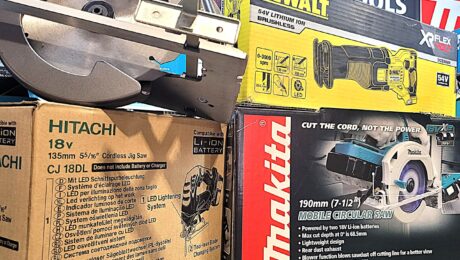
Powered Saws: A Practical Guide for Industry, Trades and DIY
Powered saws are a staple across construction, fabrication, maintenance and home projects. From cutting structural timber on-site to trimming laminate in a workshop, choosing the right saw—and using it correctly—can make a significant difference to efficiency, finish quality and safety.
This guide breaks down the main types of powered saws, where they fit best, and what to consider before you buy.
What Are Powered Saws?
Powered saws use electric, battery or petrol-driven motors to drive a cutting blade. Compared to manual saws, they deliver faster cutting speeds, improved consistency and reduced physical effort. The right model will depend on the material, precision required and working environment.
Types of Powered Saws and Their Applications
Circular Saws
A circular saw is one of the most widely used cutting tools across trades and DIY.
Best for:
- Straight cuts in timber, plywood and sheet materials
- Framing, decking and general construction
- Breaking down large panels
Key advantages:
- Portable and versatile
- Fast cutting over long lengths
- Wide range of blade options
Considerations:
- Limited precision for fine finish work
- Requires steady handling for accuracy
Mitre Saws (Drop Saws)
Mitre saws are designed for accurate crosscuts and angled cuts.
Best for:
- Trim work, skirting and architraves
- Framing where consistent angles are required
- Workshop-based cutting
Key advantages:
- High precision and repeatability
- Adjustable angles for bevel and mitre cuts
- Clean finishes
Considerations:
- Less portable than handheld saws
- Limited cutting width depending on model
Table Saws
A table saw is a workshop essential for repeated, precise cuts.
Best for:
- Ripping timber to width
- Cabinet making and joinery
- High-volume cutting tasks
Key advantages:
- Excellent accuracy and control
- Stable work surface
- Suitable for repetitive work
Considerations:
- Requires space and setup
- Less suitable for on-site portability
Reciprocating Saws
Also known as demo saws, these are built for aggressive cutting.
Best for:
- Demolition work
- Cutting through timber, metal, pipes and nails
- Tight or awkward spaces
Key advantages:
- Extremely versatile across materials
- Works in confined areas
- Minimal setup required
Considerations:
- Rough finish
- Lower precision
Jigsaws
Jigsaws are ideal for detailed or curved cuts.
Best for:
- Curved shapes and cut-outs
- Light fabrication and DIY projects
- Thin materials and panels
Key advantages:
- High manoeuvrability
- Suitable for intricate work
- Wide blade selection
Considerations:
- Slower cutting speed
- Can wander on thicker materials
Band Saws
Band saws use a continuous loop blade for smooth, controlled cutting.
Best for:
- Metal fabrication
- Cutting irregular shapes
- Workshop applications
Key advantages:
- Clean, consistent cuts
- Reduced material waste
- Suitable for thicker materials
Considerations:
- Typically workshop-based
- Requires maintenance and setup
Cut-Off Saws (Chop Saws)
Cut-off saws are designed for straight, heavy-duty cuts in tough materials.
Best for:
- Steel, aluminium and other metals
- Construction and fabrication
- Repetitive straight cuts
Key advantages:
- High power for dense materials
- Quick, consistent results
- Durable build for site use
Considerations:
- Limited to straight cuts
- Generates sparks and heat (metal cutting)
Chainsaws
Chainsaws are purpose-built for timber cutting in outdoor environments.
Best for:
- Tree felling and pruning
- Firewood preparation
- Rural and property maintenance
Key advantages:
- High cutting speed in timber
- Portable and powerful
- Available in petrol and cordless options
Considerations:
- Requires strict safety practices
- Not suitable for precision work
Corded vs Cordless: What’s Right for You?
Corded Powered Saws
Pros:
- Continuous power supply
- Ideal for workshop and extended use
- Generally lighter upfront cost
Cons:
- Restricted by power access
- Cable management required
Cordless Powered Saws
Pros:
- Portability and flexibility
- Ideal for on-site work
- Rapid improvements in battery performance
Cons:
- Runtime depends on battery capacity
- Higher upfront investment for batteries and chargers
For many trades, cordless platforms are now the preferred option due to convenience and improved power output.
Blade Selection Matters
The blade you choose has a direct impact on performance and finish.
Key factors:
- Material: Timber, metal, plastic or multi-purpose
- Tooth count: More teeth = finer cut, fewer teeth = faster cut
- Blade diameter: Must match the saw specifications
- Kerf width: Thinner kerf reduces load on the tool
Using the correct blade not only improves results but also extends the life of your saw.
Safety Considerations
Powered saws are highly effective tools, but they demand respect.
Essential safety practices:
- Wear appropriate PPE (eye, hearing and hand protection)
- Ensure guards are in place and functioning
- Secure the workpiece before cutting
- Keep hands clear of the blade path
- Disconnect power before changing blades
On-site environments may also require compliance with workplace safety standards and procedures.
Choosing the Right Powered Saw
Before making a purchase, consider:
- Application: What materials and tasks are most common?
- Frequency of use: Occasional DIY vs daily trade use
- Portability needs: Workshop vs site work
- Power requirements: Corded vs cordless platform
- Budget: Balance upfront cost with long-term value
For many users, a combination of saws—such as a circular saw for site work and a mitre saw for precision—provides the best overall capability.
Maintenance and Longevity
Regular maintenance keeps your equipment performing reliably:
- Clean dust and debris after use
- Check blades for wear or damage
- Keep moving parts lubricated where required
- Inspect cords, batteries and safety features
A well-maintained saw delivers better results and reduces downtime.
Final Thoughts
Powered saws are an essential part of any toolkit, whether you’re working on-site, in a workshop or tackling projects at home. Understanding the strengths of each type helps you choose the right tool for the job, improve efficiency and achieve a cleaner finish.
Alltools WA provide a wide range of powered saws and accessories suited to industry, trades and DIY applications. Whether you’re upgrading your setup or starting from scratch, selecting the right equipment will pay off in both performance and reliability.
Looking for the right powered saw? Explore the range online or speak with the team for practical advice tailored to your work.
- Published in Tool Type
